Why 97 Million Americans Now Turn to AI for Health Advice
GLP-1 medications have rapidly evolved from a niche treatment into one of the most influential...
Despite AI chatbots' disclaimers that they are not doctors, users are still asking LLMs their health questions.
AI is no longer an emerging technology. For the past few years, consumers have been using AI to write emails, plan vacations, shop for products, manage finances, and increasingly, make decisions about their health. New MRI-Simmons research shows that 37% of U.S. adults, or 97 million Americans, have used AI to assist with healthcare decisions in the past year, bringing one of life's most personal and important decision-making categories into the AI era. As consumers become increasingly comfortable consulting AI across every aspect of their lives, healthcare is becoming a natural extension of a habit that's already firmly established. Whether they're trying to understand lab results, evaluate symptoms, choose a provider, or build healthier lifestyles, consumers are increasingly looking to AI as a trusted resource.
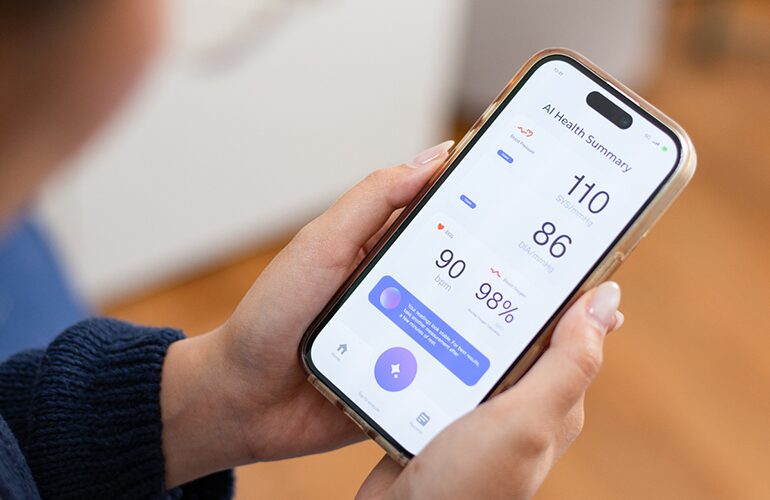

397 million Americans have already used AI to help make healthcare decisions, making it one of AI's fastest-growing consumer applications.
Healthcare Is Following the Same AI Adoption Curve as Everything Else
One of the biggest stories in AI is how quickly consumers have integrated it into their daily routines. Healthcare appears to be following that same pattern. The audiences most likely to use AI for healthcare decisions look very similar to the audiences driving AI adoption overall.
- Gen Z men are 56% more likely than the average adult to use AI for healthcare decisions, while Gen Z women are 40% more likely.
- Adoption is also higher among Asian adults (+33%), Black adults (+18%), and Hispanic adults (+15%).
- Adults enrolled in Medicaid are 36% more likely to use AI for healthcare decisions, while retail health clinic users are 58% more likely.
What's particularly interesting is that many of these groups are traditionally less connected to the healthcare system through routine doctor visits, specialist care, or employer-sponsored insurance. AI may be helping close some of those information gaps. Just as consumers use ChatGPT to answer questions they might have searched on Google, many are now using AI to answer healthcare questions they might otherwise have asked a doctor, pharmacist, or insurance representative.


ChatGPT Isn't Just Changing Work. It's Changing Healthcare Too.
When people think about AI, the image that comes to mind is chatbots. That version of AI is no different in healthcare situations.
- 57% (55 million) use chatbots such as ChatGPT or Gemini.
- 34% (33 million) use virtual assistants like Siri and Alexa.
- 28% (27 million) use AI-powered symptom trackers.
- 21% (20 million) use AI doctor recommendation tools.
These numbers suggest that consumers are not relying on a single AI solution. Instead, they're building a toolkit of AI-powered resources to help them navigate healthcare. In many ways, AI is becoming another touchpoint in the healthcare ecosystem, sitting alongside search engines, social media, health websites, and healthcare providers themselves.
Most Consumers Aren't Replacing Doctors. They're Showing Up Better Prepared.
Despite some of the headlines surrounding AI in medicine, most healthcare AI use is surprisingly practical.
- 24% use AI to understand medical test results.
- 24% use AI to explore medication side effects or interactions.
- 19% use AI to decide whether they should seek care or wait.
- 16% use AI to find providers.
- 16% use AI to better understand insurance coverage, costs, and benefits.
- 14% use AI to prepare for appointments.
Most people aren't asking AI to completely replace experts. They're using it to become more informed before speaking with those experts. AI helps consumers feel more confident, ask better questions, and navigate complex information.

After doing some homework with AI tools, patients show up better informed, ask better questions, and make more confident healthcare decisions.

But Some Consumers Are Starting to Treat AI Like a Second Opinion
At the same time, a growing group of consumers is delegating AI a larger role in the decision-making process.
- 18% are using AI to diagnose health conditions.
- 16% are using AI to get a second opinion.
- 13% are using AI to identify appropriate medications.
While these numbers remain smaller than more informational use cases, they demonstrate how quickly trust in AI is evolving.

Consumers Have Concerns, But Experience Changes Everything.
The conversation around AI in healthcare is not without skepticism.
- 72% of U.S. adults worry that AI could remove the human aspect of care.
- 64% are concerned about the privacy of their personal information when AI is involved.
Those concerns are real, and marketers shouldn't ignore them. Consumers still want compassion, trust, and human expertise when it comes to healthcare decisions.
What's fascinating, however, is how differently healthcare AI users view the technology.
- 55% of adults are comfortable with providers using AI to listen and take notes during appointments, compared to 78% of healthcare AI users.
- 50% of adults are comfortable with AI-assisted diagnoses, compared to 73% among healthcare AI users.
- 51% of adults trust or would trust recommendations from wearable devices, rising to 75% among healthcare AI users.
- 43% trust health information generated by AI, compared to 71% of healthcare AI users.
- 41% believe the benefits of AI in healthcare outweigh the risks, increasing to 65% among healthcare AI users.

The pattern is clear: familiarity drives acceptance. The more consumers use AI, the more comfortable they become with seeing it integrated into healthcare experiences. Consumers using AI in healthcare decisions represent an emerging audience segment defined not just by technology usage, but by mindset. They are more comfortable with personalization, more open to digital guidance, and more willing to trust data-driven recommendations.

Perhaps one of the most significant opportunities for marketers lies outside traditional healthcare. Consumers are also using AI to support healthier lifestyles.
- 19% use AI for diet recommendations or meal planning.
- 18% use AI to generate exercise plans.
- 18% use AI for mental health support.
These behaviors position AI as more than a healthcare resource. It's increasingly acting as a personal wellness coach.
Meet Consumers Where They're Already Going
The rise of AI in healthcare is part of a much larger story. Consumers are using AI everywhere, and healthcare is becoming one more area where people expect fast answers, personalized guidance, and on-demand support.
To connect with audiences, brands should address real questions people are already asking AI, provide transparent information, and balance innovation with reassurance. The most effective messaging will combine the efficiency and personalization consumers want from technology with the empathy and trust they still expect from healthcare.
After all, when 97 million Americans are already using AI to help make healthcare decisions, the question is no longer whether AI will influence the healthcare journey. The question is how brands will adapt to a consumer who increasingly turns to AI before turning anywhere else.
Source: MRI-Simmons 2026 Health & Wellness Study (SP26 USA)