The 2026 Midterms Arrive Amid Voter Anxiety and Uncertainty
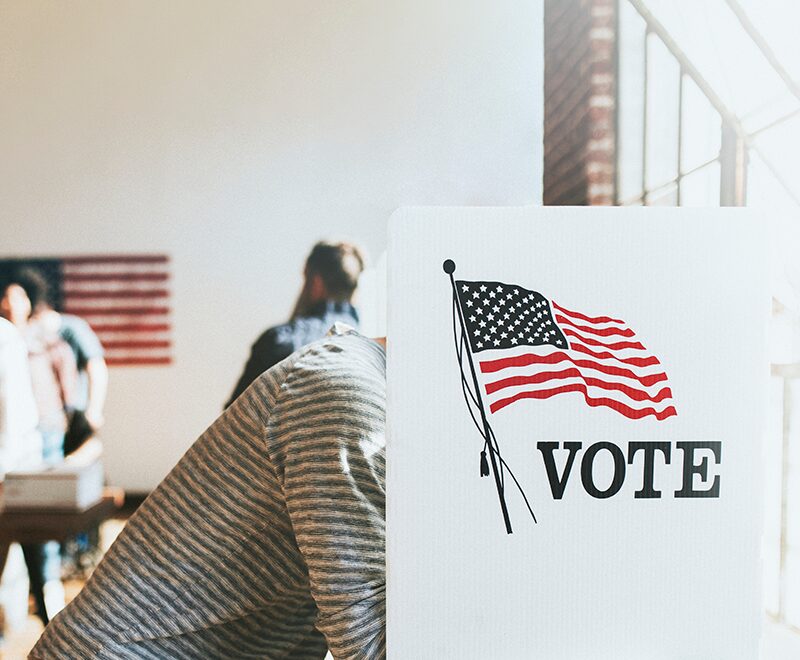
MRI-Simmons' Trending Topics Study reveals how Americans feel about the upcoming midterms - and how to reach voters before the polls open.
As the 2026 midterm elections approach later this year, the U.S. political landscape is defined by caution, polarization, and fatigue. 78% of U.S. adults believe the U.S. should not start or get involved in any new wars, signaling strong public resistance to global military escalation. Concerns about political optics are also high, with 69% worrying that sending troops to sanctuary cities is more about politics than public safety, and 67% concerned that Trump’s presidency is negatively impacting relationships with key allies. That tension extends beyond diplomacy, as 64% even worry the current political climate could affect upcoming international sporting events in the U.S., like the FIFA World Cup and the 2028 LA Olympics.
Against this backdrop, 71% of U.S. adults—over 186 million people—say they plan to vote in the midterms, while 18% (46 million) do not plan to participate. Another 11%, or over 30 million adults, remain unsure if they will cast a ballot, making them a critical swing audience for both campaigns and advertisers.
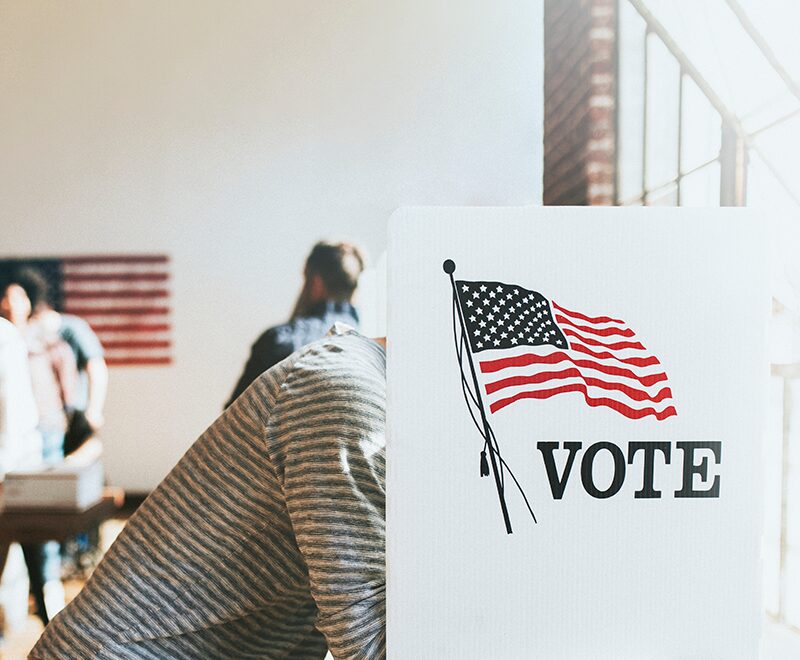

As 186 million Americans prepare to vote, more than 30 million remain unsure if they’ll cast a ballot.
A large voting bloc that still shows deep divides
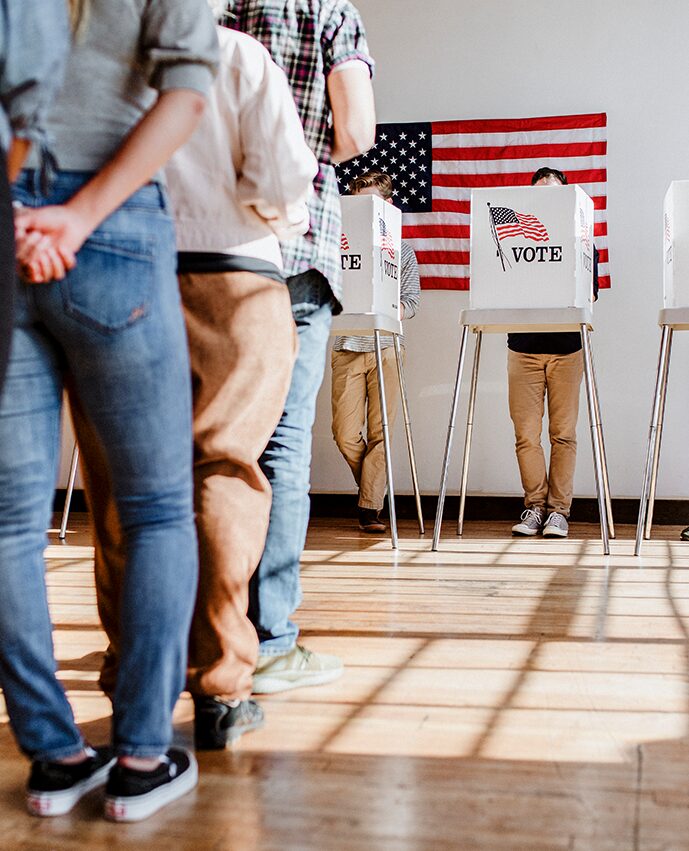
Among the 186 million Americans planning to vote, participation methods remain largely traditional, with 76% planning to vote in person and 24% opting for mail-in ballots.
- This voting population is evenly split 50/50 between men and women, with a median age of 51, and they are 21% more likely than the average adult to be 65 or older.
- Racially, they skew whiter, with 74% identifying as White (Index 104) and 13% as Black (96), and they are 15% less likely to be Hispanic than average.
- Economically, 61% are employed, which is right on par with the average adult (100), though they are also 16% more likely to be retired, reflecting life-stage stability.
- Their median household income is $108K, which is 11% higher than average, suggesting stronger purchasing power.
- Politically, they are perfectly balanced with 34% Democrats and 34% Republicans, while 39% identify as conservative, 28% as liberal, and 33% as middle of the road, underscoring ideological fragmentation even among likely voters.

Political ads face skepticism, but still shape decisions
Planned voters may be engaged, but they are highly skeptical of political advertising.
- 87% believe political ads are often misleading or biased, and 79% say political ads do not influence their vote, even as 45% admit ads help them decide when they are undecided.
- Information overload is a defining challenge, with 71% saying there is so much news coming at them that it’s hard to keep up, and 67% unsure which news sources to trust.
- Despite that distrust, 60% feel political ads still provide insight into candidates’ priorities and proposals, suggesting messaging can break through when it is perceived as substantive.
- These fragmented trust patterns require advertisers to diversify placements. For media buyers, this means repetition and consistency across platforms matters more than ever.
Binary views define the issues driving the election
On critical issues, planned voters hold seemingly contradictory views that coexist side by side. These contradictions reveal voters who are conflicted, nuanced, and receptive to issue framing rather than party slogans.
81%
believe most Americans are immigrants or descended from immigrants.

63%
say being born in the U.S. is important to being truly American.

66%
think ICE targets all immigrants, including those here legally.

57%
agree deploying the National Guard is necessary to reduce crime in big cities.

55%
believe ICE is trying to protect U.S. citizens.

69%
worry that sending troops today is more about politics than safety.

77%
believe firearm ownership is a basic American right.

66%
simultaneously support more firearm restrictions.
Culture, climate, and economy collide
- Cultural issues show equally complex splits that matter deeply to consumers and voters.
- 62% say it’s crucial for educational institutions to maintain DEI initiatives, yet 66% worry schools focus too much on DEI over academic excellence, and another 62% believe DEI programs unfairly prioritize identity over qualification.
- Consumer behavior reflects this tension, as 43% say they no longer shop at certain stores because those brands removed formal DEI policies.
- Reproductive rights are similarly divided, with 76% trusting women to make their own abortion decisions, while 65% prioritize protecting the rights of the unborn.
- On climate policy, 65% worry that repealing federal climate protections will accelerate environmental damage, even as 63% believe the Trump Administration and EPA are cutting taxpayer costs by eliminating regulations.
- Economically, pessimism remains, with just 18% saying the U.S. economy is better than a year ago (index 112) but 27% believing it will be better in 12 months.
- Meanwhile, 50% say household finances are unchanged, and 19% expect their finances to worsen (index 106), shaping how receptive audiences are to economic messaging.
Want to learn more?
Download our complimentary report, providing additional insights into Americans' political attitudes and beliefs.
Where midterm voters spend their media time
Understanding media habits is critical to reaching voters at scale.
- Planned voters are 14% more likely to use the Nextdoor app (10%), showing hyperlocal engagement.
- They are also 14% more likely to watch FOX Business Network (9%) and 13% more likely to watch NEWSMAX TV (7%), while still being 12% more likely to tune into MSNOW (18%) and 9% more likely to watch BBC America (10%).
- This ideological media spread continues with them being 10% more likely to watch NewsNation (5%) and 9% more likely to watch FOX News (27%).
- Print and utility media still resonate, as they are 13% more likely to read Consumer Reports (5%).
For advertisers, this mix emphasizes that planned voters are not confined to one ideological lane. Effective reach requires presence across conservative, centrist, and mainstream outlets alike.
In a year defined by uncertainty, data-driven targeting is how advertisers can stay influential, credible, and impactful in the 2026 midterms.

30 Million Americans are still on the sidelines
The 30 million Americans unsure whether they will vote represent a fundamentally different and highly valuable audience.
- They skew younger, with a median age of 40, and are 61% more likely than average to be ages 18–24, while remaining 51% women and 49% men.
- They are 13% more likely than average to be Black and 42% more likely to be Hispanic, and 37% more likely to be single, reflecting more fluid life stages.
- Financially, their median household income is $69K, which is 29% lower than average, though, like planned voters, 60% are employed.
- Politically, 68% have no party affiliation, with just 15% Democrat and 15% Republican, and nearly 49% identifying as middle of the road.
This group is less disengaged than undecided, making them especially responsive to relevance-driven messaging.
Trust gaps, optimism, and distinct media habits
Adults who are uncertain whether they will participate in the midterms display even lower trust in traditional political communication.
- 79% believe political ads are misleading, and 75% are unsure which news sources to trust, 12% higher than planned voters.
- Only 65% say it’s important to keep up with news, and just 46% think ads explain candidates’ priorities, a sharp drop from planned voters (60%).
- Social platforms dominate, with 34% citing social media as their main news source (29% more likely than planned voters), while 29% don’t look for political news at all, even though 27% trust news websites when they do search.
- Notably, 27% are more likely to trust content that is widely shared online, highlighting the power of social proof.
- Economically, they are more hopeful, with 29% saying the economy is the same as last year and 32% expecting it to remain the same, while 41% believe their household finances will improve.
- Media-wise, they are 44% more likely than average to watch Telemundo (12%), 39% more likely to use Twitch (5%), and significantly more likely to use Snapchat (121), TikTok (115), and youth-oriented TV networks like Adult Swim and Cartoon Network.
Activate Election audiences with MRI-Simmons
Leverage MRI-Simmons data to create the right election audience for your next campaign
Through MRI-Simmons' audience activation platform, marketers can leverage trusted, nationally representative consumer insights to create and target Political Ad Engagers, Creator-Led News Followers, Religious Republican Voters, and any target in between.
Audiences can be curated from over 60,000 consumer attributes, including 1000+ attitudes and opinions, 6500+ brand preferences, shopping styles, and media habits.
Audiences can be seamlessly activated through the ad-tech platform or media partner of your choice.
Learn more about our midterm election audiences that are ready for activation.

Why advertisers and advocacy groups should target both voters and the undecided
The 2026 midterm elections will not be decided by one monolithic audience, but by the interaction between committed voters and those still weighing participation. Planned voters bring scale, stability, and spending power, while uncertain voters offer growth, diversity, and persuasion potential. Both groups are skeptical of political messaging, overwhelmed by information, and deeply divided on key issues, making relevance and authenticity paramount.
For advertisers and advocacy groups, targeting only those who plan to vote risks missing younger, more diverse consumers shaping future elections and brand loyalty. Engaging both audiences allows campaigns and brands to align messaging with real-world concerns, from economic confidence to cultural identity.
Sources: MRI-Simmons 2026 Q2 Trending Topics Study (W26 USA)