How Auto Brands Can Win the Next Wave of EV Buyers
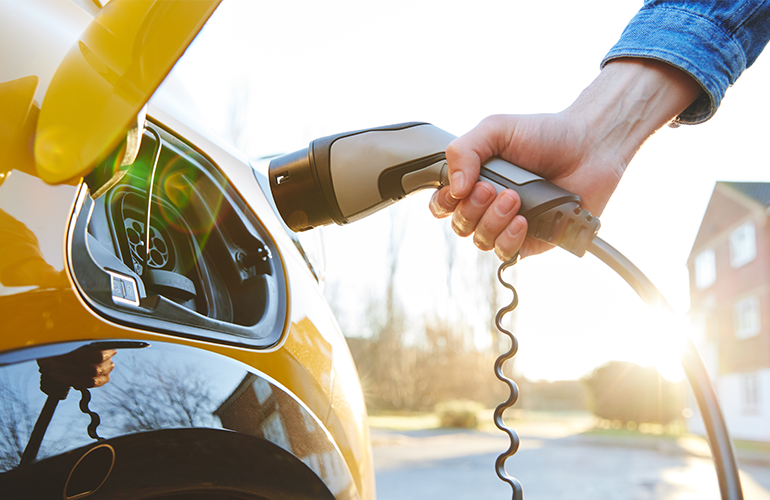
What vehicle makers need to know about rising EV auto intenders
If you’ve been watching the electric vehicle (EV) market closely, it’s starting to feel a bit like 2015 when everyone knew streaming TV would take over… but over half the country was still clinging to cable. Today, 40% of U.S. adults (about 105 million people) say they’re likely to buy an EV as their next vehicle, up from 97 million just two years ago. Within that group, 39 million are “very likely” to make the switch, signaling a surprisingly strong core of committed future buyers. And yet, fewer than 10% of Americans currently own an EV. That gap between intention and reality is where the real story lives.
This is the definition of a market on the brink: mass awareness, rising intent, but still waiting for a tipping point. It’s not that Americans don’t want EVs; it’s that they’re waiting for them to feel easier, cheaper, and more obvious. And just like streaming eventually reshaped entertainment, EVs are poised to reshape how Americans think about mobility.

EV adoption may still be in single digits, but consumer intent tells a different story: millions of future buyers are already in the market.
This isn’t about saving the planet anymore - it’s about saving money
One of the biggest mindset shifts happening right now is why people want EVs. A few years ago, this was all about climate. Today, it’s a lot more practical.
- 46% of “likely buyers” cite reduced fuel costs as the top driver, making it the number one motivator by a wide margin.
- Environmental impact still matters, but it’s slipped to 35% (down from 41% 2 years ago). That’s not because people don’t care, but rather EVs have become less about identity and more about everyday value.
Other motivations reinforce this shift toward practicality with a tech edge.
- 34% value the quiet driving experience, 31% point to innovative technology, and another 31% care about longer battery life.
- Add in 30% wanting fewer maintenance needs, and you start to see EVs reframed less like a cause and more like a smart upgrade.
- Even performance is creeping in, with 25% attracted to faster acceleration and 20% influenced by popularity, a subtle but important signal that EVs are crossing into mainstream cultural relevance.
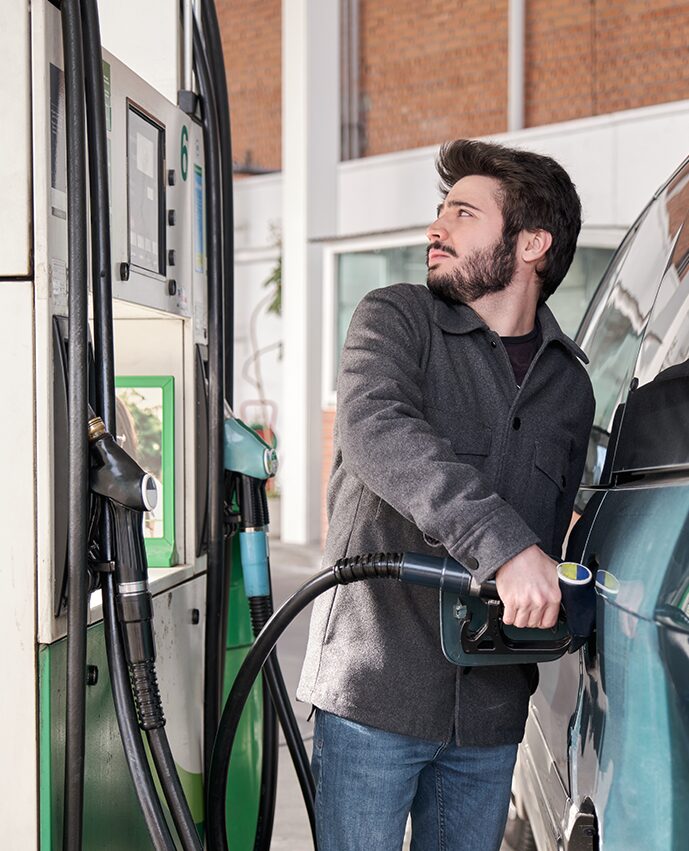
This is where pop culture starts to matter. Whether it’s EVs showing up in movies, being driven by influencers, or simply becoming more visible on the road, they’re no longer “alternative” but rather “aspirational.” And when that happens, behavior follows.
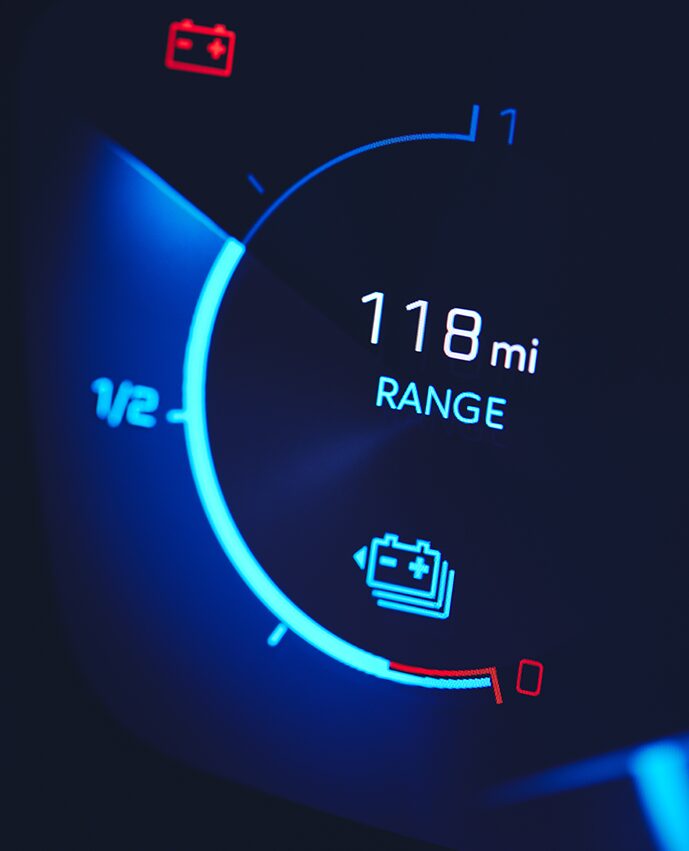
Range, charging, and the experience gap still define the category
Even with all this momentum, consumers are still holding onto a few very real concerns. The biggest one? Range.
- 58% of Americans say longer driving range would influence them to buy an EV, with 37% of “unlikely buyers” agreeing with that. That’s huge.
- The same goes for charging: 56% of adults want faster-charging batteries, with 34% of skeptics agreeing.
But here’s where it gets interesting. Consumers aren’t just asking, “Will it work?” They’re also asking, “Will I enjoy it?”
- 49% of adults say having a fun-to-drive vehicle matters, and 43% want strong performance and acceleration.
- Meanwhile, 46% care about dashboard tech, 42% are interested in self-driving features, and 26% want bold, standout design. This is beyond a purely rational purchase and is now emotional, experiential, and yes, aesthetic.
And brand still matters a lot. 51% of consumers say they’d consider an EV if their preferred brand offered one, and even among skeptics 27% agree. That tells us something powerful: unfamiliarity is still a barrier while brand loyalty plays a role.
Consumers are sold on the promise of EVs. Automakers must now address range concerns, charging friction, and everyday usability.
Charging anxiety is the “password you forgot” of EV adoption
If EV adoption were an app, charging anxiety would be the login problem that keeps you from opening it. You want to use it, but it feels like friction.
- While 67% of Americans agree that charging at home is more convenient than in public, not everyone has that option. And the result? 63% say they’re more likely to buy a hybrid instead, because it removes that uncertainty altogether.
The demand signals are clear.
- 59% want charging stations where they shop, eat, and spend time, and even 40% of unlikely buyers want this.
- 54% say they’d consider an EV if more public chargers were available, including 31% of skeptics. People need to see charging as part of everyday life before they trust it.
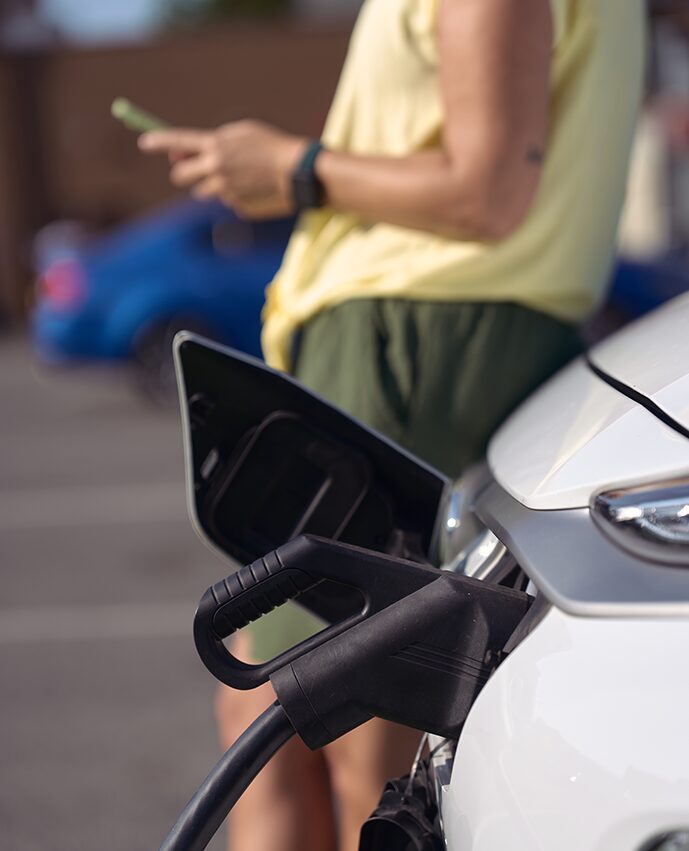
Right now, EV charging still feels like something you must plan for. For mass adoption, it needs to feel like something you barely think about: more like Wi-Fi than a gas station. The brands and partners that make charging invisible will make adoption inevitable.
Pricing is the make-or-break moment
If there’s one place where the EV story has gotten more complicated recently, it’s pricing.
- 56% of Americans say they’d consider an EV if it were more affordable, including 35% of unlikely buyers.
- Incentives have historically helped bridge that gap, with 50% influenced by rebates and 48% by government EV incentives.
But changes in federal policy, like the repeal of the $7,500 tax credit, strongly impacted sales in early 2026. That tells us just how sensitive the market still is to upfront costs.
Consumers aren’t ignoring EVs so much as they are recalculating. Add to that the fact that only 39% of Americans are comfortable paying a premium for EVs (just 13% among unlikely buyers), and the path forward becomes clear. EVs don’t just need to be “worth it.” They need to feel like the smarter financial choice today, not five years from now. That’s as much a messaging problem as it is a pricing one.
The next EV buyer looks like a younger, urban power user
When you zoom in on who’s driving this next wave, a clear profile emerges.
- Men are still more likely than women to consider an EV (45% vs. 35%), which suggests there’s still a perception or confidence gap brands haven’t fully closed.
- But the real story is generational: 57% of adults under 45 plan to buy an EV, 43% higher than average. This is your “always-on, iPhone-every-two-years, subscribes-to-everything” cohort. They are used to upgrading technology, and they see EVs through that same lens.
- Income reinforces the pattern. Nearly half (48%) of households making $200K+ are likely EV buyers, followed closely by 44% in the $100K–$200K range, and even 39% in the $50K–$100K segment. EV interest is clearly moving beyond the luxury niche into upper-middle America.
- Geography matters too, and not in surprising ways: 47% of households in Miami and San Francisco DMAs and 46% in Dallas and Houston are leaning EV. These are places where tech adoption, lifestyle, and infrastructure are already aligned.
The next EV buyer is different from the early adopters. They look more like representative America, and though emphasis remains in urban areas and higher income households, consumers outside those boxes are joining the conversation. The miss right now is relevance. Consumers are just waiting for the right reason to act.
The Takeaway: Winning the EV transition means meeting people where they are
If you step back and connect all the dots, the opportunity is enormous, but so is the challenge. The next EV buyer isn’t an early adopter anymore. They’re pragmatic, digitally savvy, and increasingly mainstream. They care about sustainability, but they also consider cost, convenience, and experience.
For auto brands, this requires a shift in strategy. Stop leading with “electric” as the headline and start leading with value, performance, and ease of life. Make EVs feel like the obvious upgrade, not the responsible choice. Focus on high-intent segments (young, affluent, urban consumers) but don’t alienate the hesitant majority. Instead, bring them along by solving their biggest friction points: charging, cost, and familiarity.
Because here’s the truth: the EV transition won’t be won by the 15% who are already all-in. It will be won by the 60% who are still deciding. And right now, they’re just waiting for EVs to fit a little more seamlessly into their lives.
Ready to activate your next campaign?
MRI-Simmons has a full library of syndicated audience segments ready for activation through leading programmatic platforms. Check them out by clicking the image to the left.
Source: MRI-Simmons 2026 May Digital Life Study (W26 USA). Likely buyers = Somewhat OR Very likely to purchase an all-electric vehicle as their next vehicle. Unlikely buyers = Not very OR Not at all likely to purchase an all-electric vehicle as their next vehicle.