Beyond the Rainbow: What Pride Month Really Reveals About LGBTQ+ Consumers

What financial service companies need to know about the youngest adults as they learn to manage their money
Pride Month captures national attention each year, but the reality of support for LGBTQ people tells a more complex story across the U.S. Among adults, 57% say they are supportive of the LGBTQ community, either very or somewhat supportive, while 43% say they are not very or not at all supportive. Notably, only 29% of adults describe themselves as very supportive, highlighting a meaningful gap between general acceptance and strong allyship. This distinction matters for marketers, as it signals that consumer sentiment is not uniform, but layered with varying degrees of comfort, engagement, and openness. The takeaway is clear: brands are not speaking to a single audience, but to a spectrum of perspectives that can shape how messages are received.

59% of U.S. adults personally know someone who is LGBTQ but only 29% say they are very supportive, revealing a critical gap between familiarity and strong allyship.
From Beliefs to Behavior: What Shapes Consumer Support
Understanding support for LGBTQ communities requires looking beyond top-line sentiment and examining the underlying factors that shape consumer attitudes.
- Personal connection plays a critical role, as 59% of U.S. adults say they personally know someone who is LGBTQ and 38% say they know someone who is transgender, bringing these identities into everyday life for many Americans.
- At the same time, broader societal concerns remain, with 49% of adults saying the current political climate has them worried about LGBTQ people and 53% believing anti-LGBTQ legislation is going too far.
These insights highlight that attitudes are shaped not only by personal relationships, but also by the cultural and political environment in which consumers live.
Social and cultural influences further shape how consumers interpret LGBTQ+ issues and form their perspectives.
- Among U.S. adults who are not supportive of the LGBTQ+ community, 45% mention traditional family values as a primary reason, while 20% say they are concerned about the community’s influence on children.
- Religious beliefs and social circles also play a role, with 11% pointing to religion and 9% influenced by family and friends who do not support LGBTQ+ individuals.
- These influences are reflected in broader attitudes toward gender and identity, where 67% of total adults agree that gender should be binary and 67% say they like knowing what gender someone is.
- At the same time, 65% agree that people should be free to use and share their pronouns, reinforcing that openness and traditional views often coexist.
For marketers, this tension is critical: consumer attitudes are not fixed or one-dimensional, but shaped by overlapping beliefs, experiences, and influences that require a more thoughtful and informed approach.
The brand expectation gap: Opportunity meets resistance
As consumer attitudes toward LGBTQ+ issues continue to evolve, brands are increasingly expected to take a stance – but that expectation is far from universally agreed upon.
- Among U.S. adults, 51% say they believe most companies should support the LGBTQ+ community, and an even higher 54% say brands should show that support year-round, not just during Pride Month.
This signals a shift in expectations, where brand participation is no longer seen as optional or seasonal, but as an ongoing commitment tied to authenticity.
- At the same time, 44% of adults say they are more likely to purchase from brands that support the LGBTQ+ community, reinforcing that alignment can directly influence consumer behavior.
- Additionally, 57% say they do not mind when brands promote products or services specifically geared toward the LGBTQ+ community, indicating a general openness to inclusive marketing efforts.
Together, these insights highlight a clear opportunity: for many consumers, brand support is not just noticed – it is valued and rewarded.
However, this opportunity exists alongside meaningful resistance, creating a landscape defined by tension and polarization.
- Nearly 39% of U.S. adults say they are turned off by brands that support the LGBTQ community, while 26% say would stop buying from a company if a transgender person works there.
- At the same time, 45% believe companies should be able to opt out of serving LGBTQ+ customers, and 51% say organizations should be allowed to refuse service if it conflicts with their religious beliefs.
These findings underscore that brand alignment is not a neutral decision – it is a signal that can attract or repel different segments of the market. For marketers, this creates a delicate balance between growth and risk, where understanding audience composition and context becomes critical. Inclusive marketing can drive stronger engagement and loyalty, but only when it is approached with clarity, consistency, and a deep understanding of the diverse perspectives that define today’s consumer landscape.
Brand support can build loyalty with audiences, but risks pushing others away.
From values to value: Turning LGBTQ+ alignment into action
For today’s consumers, support for LGBTQ+ issues increasingly translates into real-world expectations and behaviors that shape how they interact with brands.
- Among U.S. adults, 50% say they are more likely to purchase brands that support a cause they care about, and 32% say they expect the brands they buy to actively support social causes.
Together, these behaviors illustrate that LGBTQ+ consumers are not just responsive to inclusive positioning – they are active, engaged participants across categories, making them a valuable audience for brands that move beyond messaging and deliver authentic, consistent experiences.



Activate LGBTQ+-supporting audiences with MRI-Simmons
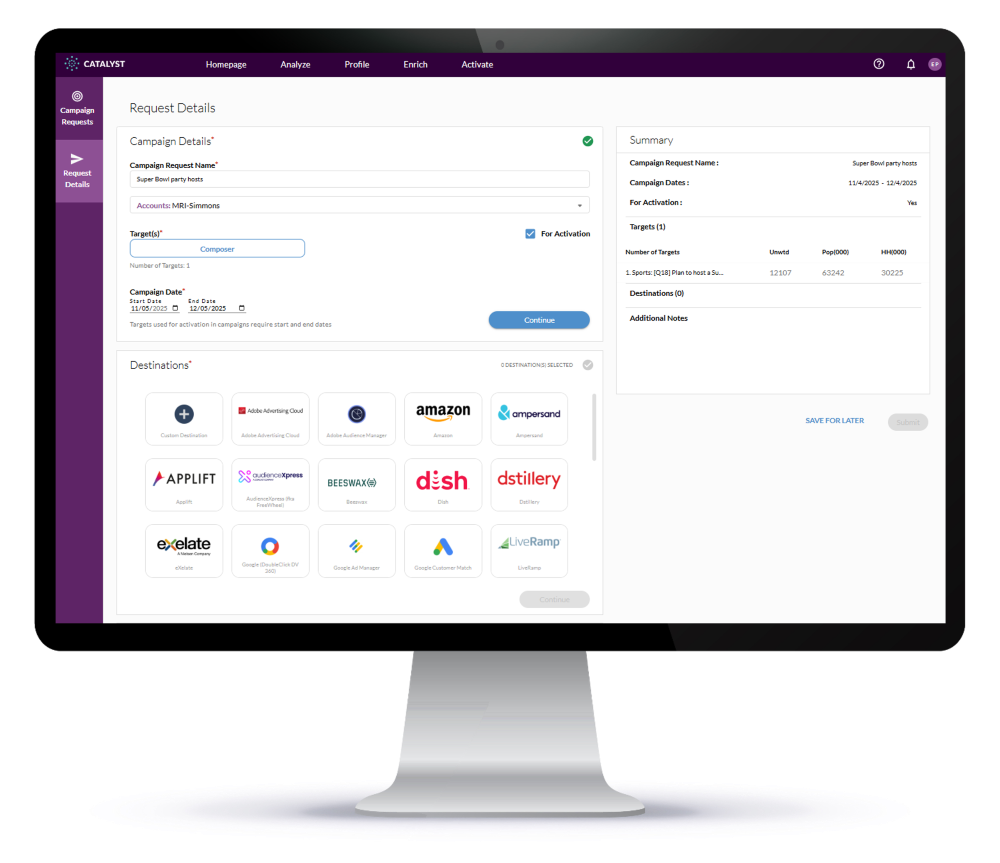
Through MRI-Simmons' activation solution, ACT, marketers can leverage trusted and nationally representative data to target and reach LGBTQ supporters, adults who are more likely to purchase from pro LGBTQ brands, and more.
Leverage MRI-Simmons data to create the right audience for your next campaign
Audiences can be curated from over 60,000 consumer attributes, including 1000+ attitudes and opinions, 6500+ brand preferences, shopping styles, and media habits.
Then, they can be seamlessly activated through LiveRamp, the Trade Desk, or the ad-tech platform or media partner of your choice.
Conclusion
As consumer attitudes toward LGBTQ communities evolve, success depends on understanding complexity rather than relying on broad assumptions. Across the U.S., support, hesitation, and differing expectations shape how consumers respond to brands and messaging. For marketers, this means moving beyond surface-level inclusion and focusing on strategies grounded in audience insight and context.
U.S. adults remain a powerful and diverse target, offering both scale and a wide range of perspectives. Within this audience, LGBTQ consumers stand out as highly engaged and responsive to brands that align with their values. Brands that succeed will be those that act consistently and show up in ways that feel authentic in every aspect of the consumer experience.
Sources: MRI-Simmons 2026 April LGBTQ and Gender Identity Study (F25 DB USA); Base: All Respondents AND NET Gay/Lesbian/Bisexual/Transgender