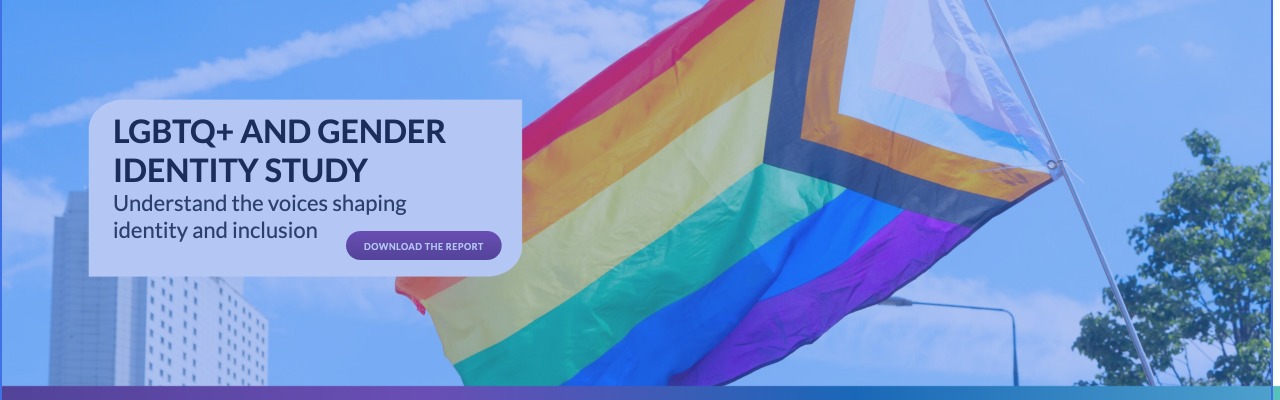



The LGBTQ+ community and its supporters represent a diverse and influential segment of the U.S. population. The MRI-Simmons LGBTQ+ & Gender Identity Study delivers a comprehensive view of Americans’ attitudes toward gender identity, sexual orientation, and LGBTQ+ representation that empowers marketers, content creators, and advocates to engage authentically and effectively.

Understand Americans' support for inclusion & identity
Why marketers need to understand the state of LGBTQ+ Support in America
- Understand public sentiment with clarity
Analyze how Americans view gender identity, LGBTQ+ inclusion, and representation in media—from allyship and public safety to evolving norms around gender and sexuality. - Develop more inclusive strategies
Build campaigns grounded in real insights into the motivations, beliefs, and behaviors of LGBTQ+ supporters and the broader U.S. population. - Enhance your analysis with deeper context
Connect attitudes to 60,000+ MRI-Simmons USA variables, including media habits, cultural values, and lifestyle traits.
How you can apply it
- Identify LGBTQ+ supporters and allies based on values, behaviors, and media preferences
- Build inclusive campaigns aligned with evolving norms and expectations
- Align messaging with public sentiment around representation and safety
What the Study Covers
The full LGBTQ+ & Gender Identity Study explores:
- Level of support for the LGBTQ community (very, somewhat, not very, not at all)
- Reasons why individuals are not supportive of the LGBTQ community
- Whether individuals personally know someone who identifies as LGBTQ
- Importance of LGBTQ-related causes, including HIV education, adoption rights, housing discrimination, and inclusion across institutions
- Perceptions of safety for LGBTQ individuals in public spaces
- General attitudes toward LGBTQ topics
- Perspectives on how brands and media should engage with LGBTQ issues
Transgender Support
- Level of support for transgender individuals (very, somewhat, not very, not at all)
- Reasons why individuals are not supportive of transgender people
- Whether individuals personally know someone who is transgender
- Attitudes toward gender identity, including pronouns and legal recognition
Download the LGBTQ+ preview report to learn more.