Why 2026 is the Year of Hands-On Experiences and At-Home Goals

As 2026 approaches, Americans are entering the New Year with a mix of hope and hesitation. According to MRI-Simmons’ Trending Topics Study, 87% of US adults say most things are too expensive, even fast food. Meanwhile, 73% feel like they’re living paycheck to paycheck, a 10-point increase since July. Yet despite these financial pressures, 59% are strategically saving in some areas so they can splurge in others, revealing a nuanced consumer mindset that, even in tough times, enjoying life and self-improvement remain top priorities. For advertisers, this signals a unique opportunity: consumers are still planning, dreaming, and spending, and they have big plans for the New Year.
Health, Wealth, and Wellness Resolutions Lead the Way
New Year’s resolutions are as popular as ever with 80% of US adults setting ambitious goals for the upcoming year. 35% want to eat healthier, 34% aim to exercise more, and 27% hope to lose weight, a clear signal that physical wellness is top of mind. Financial goals are also prominent, with 26% resolving to reduce debt and save money. Sleep and mental health are priorities too, with 25% aiming to get more sleep (down 3 points from last year) and 22% focusing on mental health. Even reading is on the radar, though only 16% plan to read more, a 5-point drop from last year.
Generational differences add nuance. Gen Z leads with resolutions to eat healthy (37%), exercise (34%), and get more sleep (28%). They’re also 72% more likely than average to want to learn a new skill, 68% more likely to start a new relationship, and 53% more likely to work on quitting smoking. Millennials share similar health goals but are also 54% more likely to plan to take all their PTO from work, and 26% more likely to cut back on alcohol, making getting rid of vices a common goal among younger adults.
Gen Xers are focused on debt reduction (29%) and are 38% more likely than average to want to be better about going to the doctor and 21% more likely to prioritize mental health. Boomers, meanwhile, are sticking to basics: exercise (31%), healthy eating (31%), and weight loss (26%), with a slight edge toward international travel (7% more likely).
For brands in wellness, finance, and lifestyle, these resolutions offer a roadmap to connect with consumers especially when tailored by generation. Gen Z wants self-discovery and growth, Millennials seek balance, Gen X values practicality, and Boomers prioritize vitality and meaningful living. Aligning creative strategy with these goals can drive deeper engagement in 2026.
Entertainment, Experiences, and Escapes
Despite economic concerns, Americans are planning to get out and enjoy life in 2026. When asked about plans for the New Year, 25% of adults plan to go to the movies, 22% to a concert, and 21% to the gym at least once. Sporting events (19%) and festivals (18%, down 7 points from last year) are also on the agenda. These numbers show that while some are cutting back, many still crave experiences.
Generational preferences offer a deeper look into how Americans plan to spend their time in 2026, and the differences are striking. Gen Z is embracing creativity and hands-on learning, with plans to take a cooking class (78% more likely than average), art classes (71% more likely), and even visiting bowling alleys (29% more likely). This signals a desire for tactile, social experiences that blend fun with self-expression. For brands, this generation is primed for campaigns that highlight skill-building, community, and playful exploration.
Millennials, on the other hand, are chasing adventure and entertainment. They’re 33% more likely to plan to visit amusement parks, 18% more likely for entertainment centers, and 17% more likely to be preparing to impress at the golf course. Their choices reflect a craving for escapism and leisure, and experiences that offer a break from the daily grind. Advertisers should lean into messaging that emphasizes fun, flexibility, and shared moments.
Gen Xers are gravitating toward indulgence and relaxation. With a 25% higher likelihood of planning to hit the casino, 24% more likely to book a cruise, and 16% more likely to put festivals on the calendar, this group is clearly seeking ways to unwind and enjoy life’s luxuries. Campaigns that speak to reward, comfort, and premium experiences will resonate strongly here.
Meanwhile, Boomers are turning toward enrichment and culture. They’re 22% more likely to plan to visit museums or cultural centers, showing a preference for meaningful, educational outings. For marketers, this is an opportunity to highlight travel, heritage, and lifelong learning in ways that feel aspirational yet accessible.
Together, these insights reveal that while economic pressures persist, each generation is still investing in joy, just in their own unique ways.
Home Is Where the Plans Are
With prices climbing across nearly every category, many Americans are turning to at-home hobbies as a way to cut costs and regain control over their budgets. In the New Year, 49% of US adults plan to prepare more home-cooked meals, a practical shift that helps reduce spending on dining out while promoting healthier habits. Additionally, over 1 in 5 plan to improve their baking skills, take on DIY projects, or start a garden, all activities that not only offer personal satisfaction but also help stretch household dollars. Baking at home can replace expensive store-bought treats, DIY projects can reduce the need for professional services, and gardening can offset grocery bills. These choices reflect a growing movement toward self-sufficiency and frugality, where hobbies double as cost-saving strategies (and possibly additional income streams). For advertisers, this trend presents an opportunity to promote products and services that support budget-friendly living, skill-building, and home-based creativity especially when framed as empowering and economical.
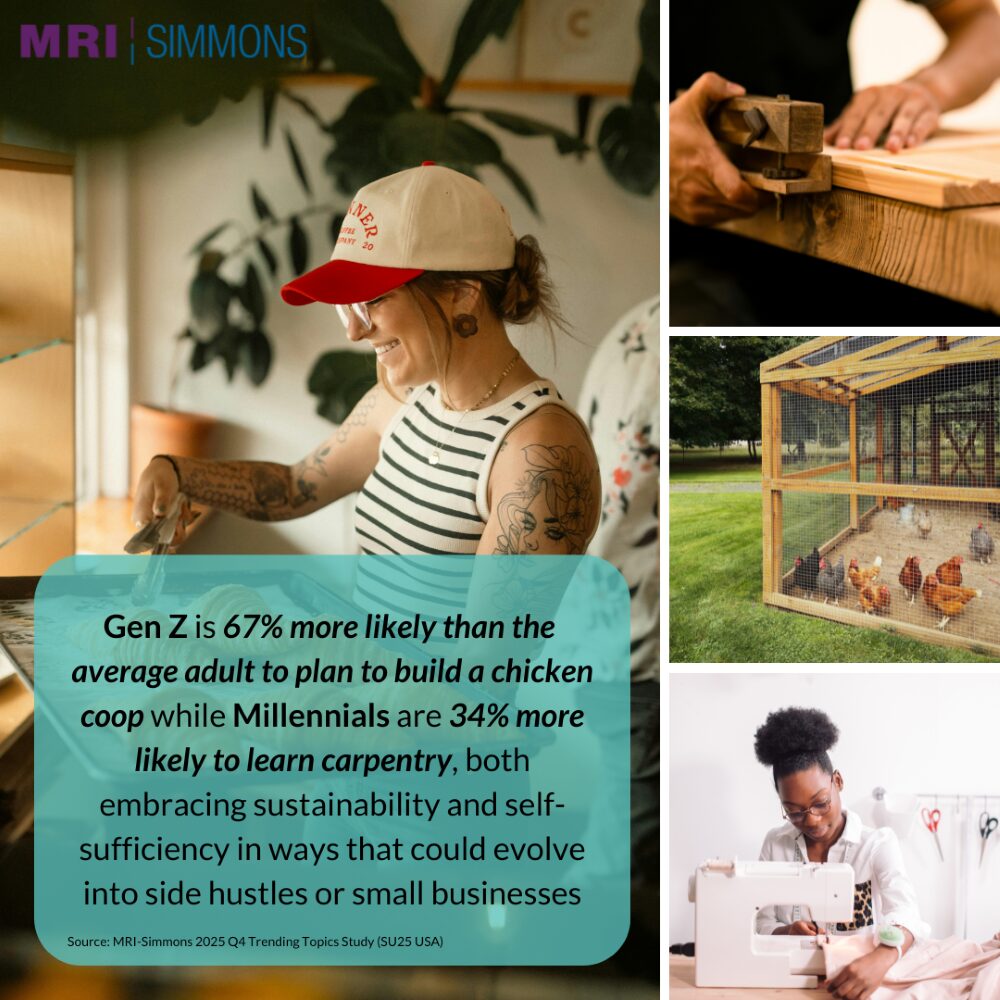
What’s interesting is that domestic activities are growing in popularity across generations, amplifying the broader shift toward home-based living. Gen Z, known for its creativity and resourcefulness, is 67% more likely to plan to build a chicken coop in the next 6 months and 53% more likely to learn sewing, embracing sustainability and self-sufficiency in ways that could evolve into side hustles or small businesses. Millennials are also leaning into traditional skills, with 34% higher likelihood to want to learn carpentry and being 28% more likely to plan to start canning or preserving fruits and vegetables. These activities not only support cost-saving at home but they could also open doors to monetization through local markets or online platforms.
Gen Xers, ever practical, are 13% more likely to simply plan to cook more at home, a move that reflects both financial prudence and a desire for healthier, controlled living. While their focus may be less entrepreneurial, it still signals a shift toward reclaiming value through everyday routines.
Across generations, rising prices are pushing consumers to rethink how they use their time and space going into the New Year, transforming homes into hubs of productivity, creativity, and resilience. For advertisers, this is a chance to support these efforts with products, services, and messaging that empower consumers to turn their passions into possibilities. #NewYearNewMe
Americans Are Still Dreaming and Advertisers Should Be Listening
Even as most Americans say everything feels too expensive and live paycheck to paycheck, they’re not giving up on entertainment, self-improvement, or experiences. From resolutions about health and finances, and from concerts and cruises to gardening and DIY, Americans are making plans for their #bestyearyet. For advertisers, this is a moment to meet consumers where they are. Messaging that acknowledges financial realities while inspiring action will win attention. Whether it’s promoting wellness, entertainment, or home projects, brands that align with Americans’ 2026 goals will be best positioned to thrive in the New Year.
Sources: 2025 Q4 Trending Topics Study (SU25 USA). Base: Total US adults 18+.
Activating the New Year through MRI-Simmons
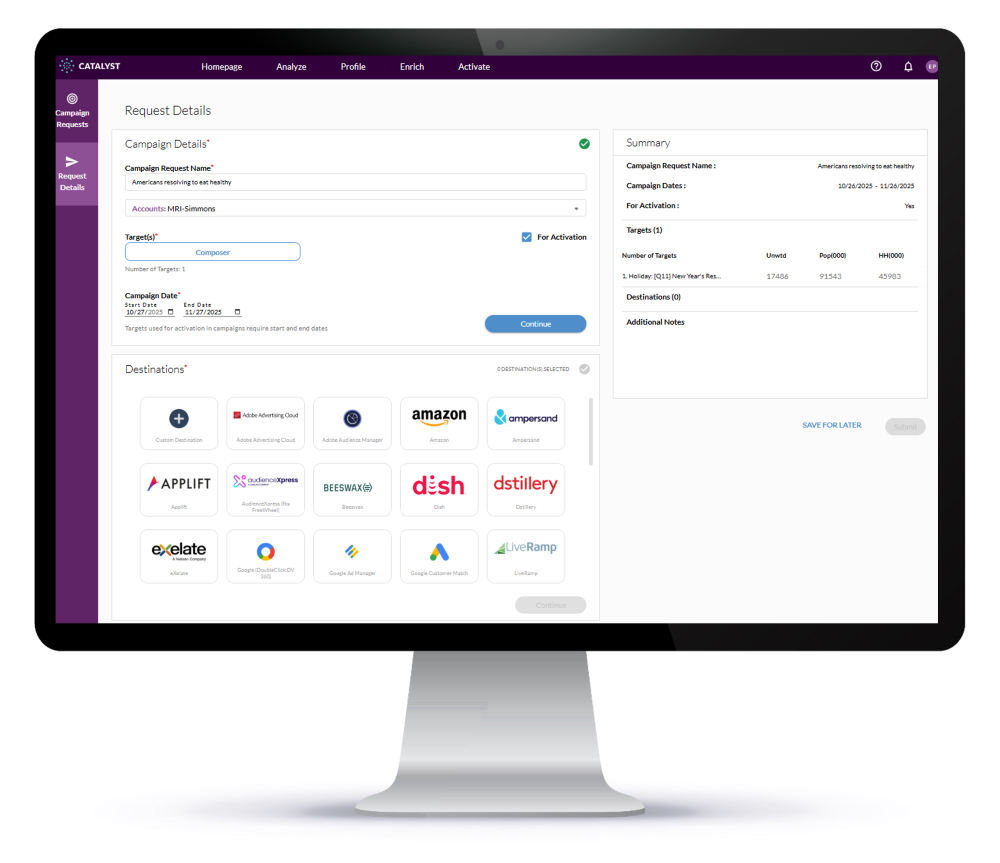
Through MRI-Simmons' activation solution, ACT, marketers can leverage trusted and nationally representative data to target and reach adults planning to exercise more, take a cruise, improve their carpentry skills, or any other target in this blog. Curate your audience with over 60,000 consumer elements: 1000+ attitudes and opinions, 6500+ brands in 1000+ product categories; and 90+ proprietary segments. Then, activate your audience via the ad-tech platform or media partner of your choice.